15 Budget Pea-Gravel Patio Ideas Under $350 That Look $10k Custom
Pea gravel patios can look high-end for less. These 15 budget ideas use smart edging, weed barriers, and DIY layouts to create a custom look under $350. Perfect for renters and weekend warriors.
1. Lay a Weed Barrier First
Before you dump gravel, roll out woven landscape fabric (not the thin spun kind) over the entire area. Overlap seams by 6" and pin every 3 feet. This stops weeds and keeps gravel from sinking into mud. For a 10' x 10' patio, you'll need a 12' x 100' roll, which costs about $25. Secure edges with 6" landscape staples. Renter tip: if you're on concrete, skip fabric and use a rubber mat base instead.
2. Choose the Right Pea Gravel Size
Pea gravel comes in 1/4" to 3/8" sizes. Smaller stones feel better underfoot but track indoors more. For a patio, go with 3/8" washed pea gravel. You'll need about 1 ton per 100 square feet at 2" deep. A cubic yard covers 100 sq ft at 3" deep. Buy in bulk bags (0.5 cu ft) for small areas or by the ton for larger patios. Expect to pay $40 to $60 per ton.
3. Edge with Pressure-Treated 2x4s
Create a crisp border with 2x4 lumber staked every 4 feet. Dig a shallow trench, set the 2x4 on edge, and drive 12" galvanized spikes through pre-drilled holes. This keeps gravel contained and defines the patio shape. For a 10' x 10' patio, you'll need about 40 linear feet of 2x4 (eight 5-foot boards). Cost is roughly $3 per 8-foot board. Paint or stain to match your home.
4. DIY a Brick Scallop Edge
For a cottage look, set standard bricks in a scalloped pattern along the gravel edge. Dig a 4" deep trench, add 1" of sand, and place bricks on end at a 45-degree angle. Fill gaps with sand. You'll need about 4.5 bricks per linear foot. Reclaimed bricks cost $0.50 each, so 50 feet runs about $115. Renter tip: use brick edging without mortar for easy removal.
5. Add a Gravel Grid for Stability
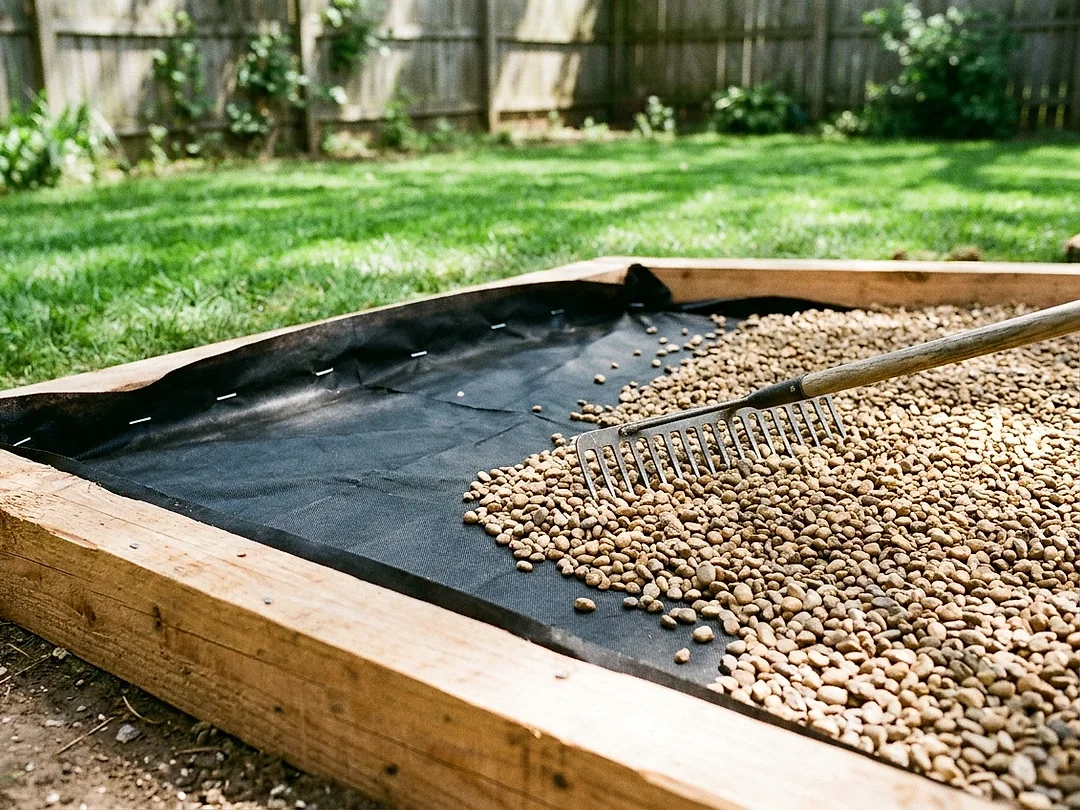
A honeycomb gravel grid keeps stones from migrating and supports chairs without sinking. Roll out the 2" deep grid over your weed barrier, fill with pea gravel, and compact. It's perfect for high-traffic areas and slopes. A 9' x 17' grid kit covers 153 sq ft and costs about $60. Trim with utility scissors. This is a game-changer for renters who need a stable surface.
6. Create a Sunken Fire Pit Circle
Dig a 4' diameter circle 6" deep in the center of your gravel patio. Line with 12 retaining wall blocks (6" x 8" x 4") and add a steel fire ring. Fill the bottom with 2" of sand, then top with gravel. Total cost: about $80 for blocks and ring. Always check local burn bans and keep the pit 10 feet from structures. Renter tip: use a portable fire bowl instead.
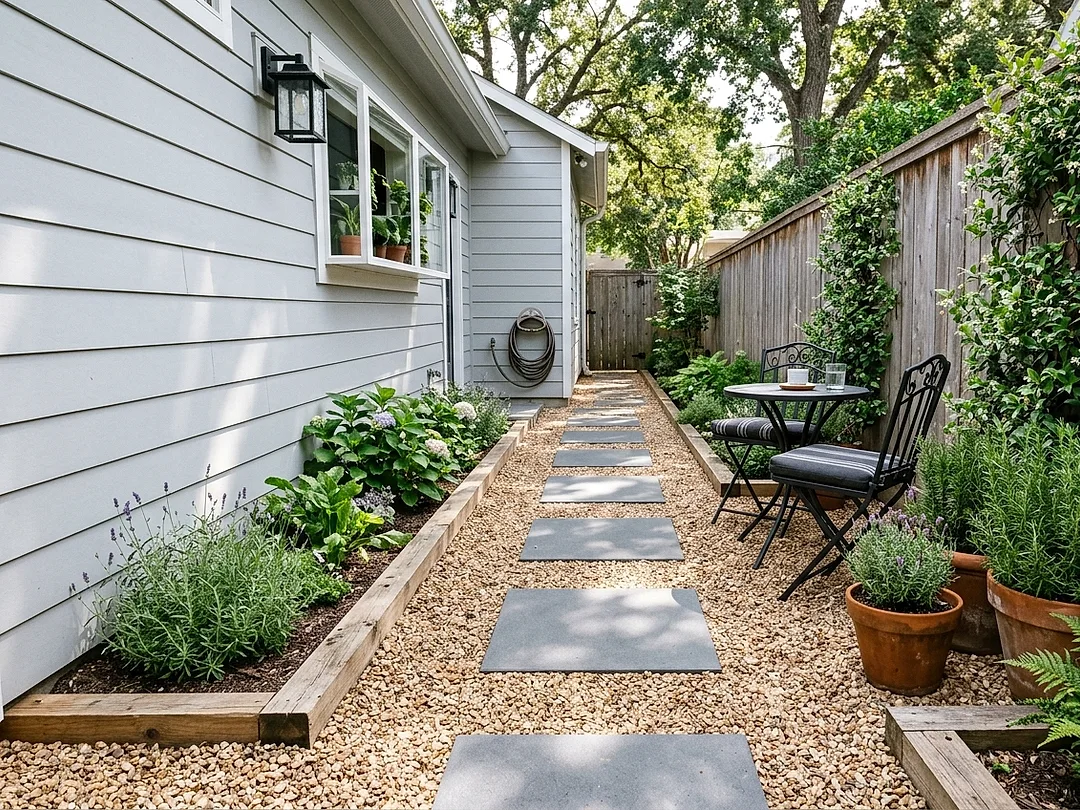
7. Lay a Flagstone Stepping Path
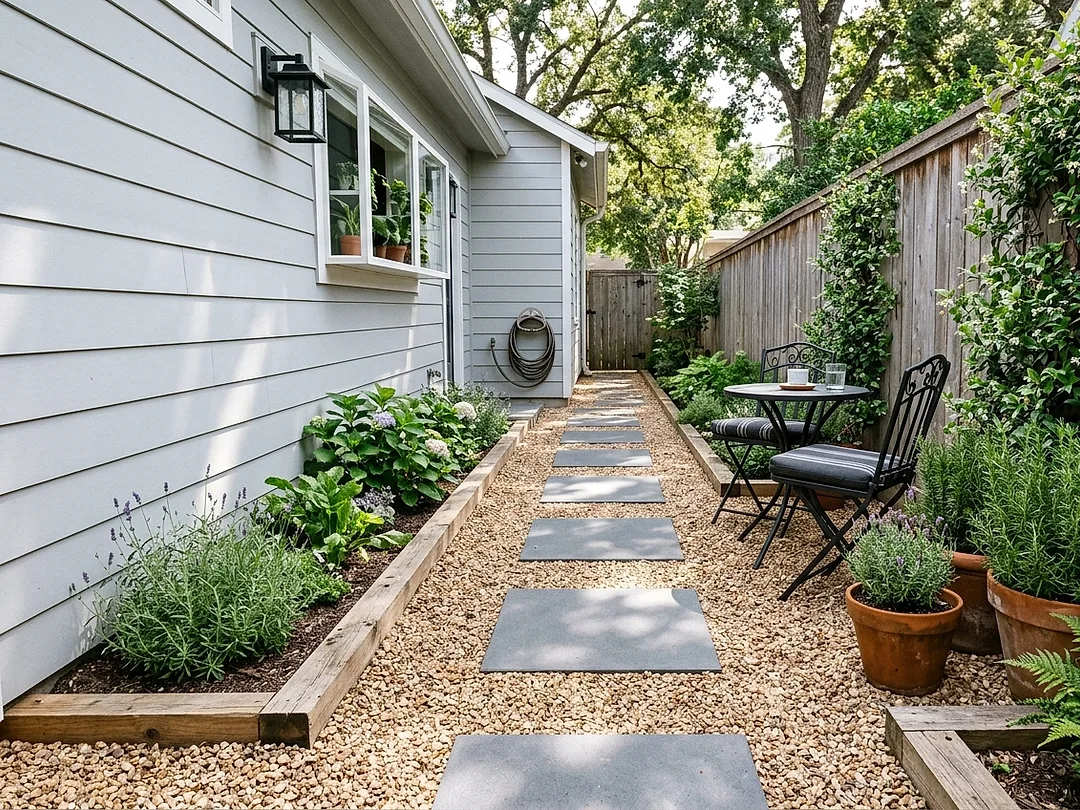
Break up the gravel with irregular flagstones set 18" apart. Dig each stone in so it's flush with the gravel surface. Use 1" of sand for leveling. You'll need about 12 stones for a 10-foot path. Craigslist or salvage yards sell flagstone for $1 to $3 per square foot. Secure with polymeric sand to prevent shifting. This adds a custom look for under $100.
8. Build a Simple Bench with Pavers
Stack three 16" x 16" concrete pavers on each side, then top with a 2x10 cedar plank. No tools needed beyond a level. The bench seats two and costs about $30 total. Seal the wood yearly. Place it along the patio edge for a built-in look. Renter tip: use construction adhesive to hold pavers together, but skip it if you need to move them later.
9. Add a Gravel-Friendly Plant Border
Plant drought-tolerant grasses and succulents right in the gravel along the edge. Dig a hole twice the pot size, amend with compost, and backfill with gravel. Good choices: blue fescue, lavender, and sedum. Space plants 12" apart. This softens hard edges and costs about $4 per plant. Water deeply once a week for the first month, then rarely. Renter tip: keep plants in pots sunk into gravel.
10. Make a DIY String Light Canopy
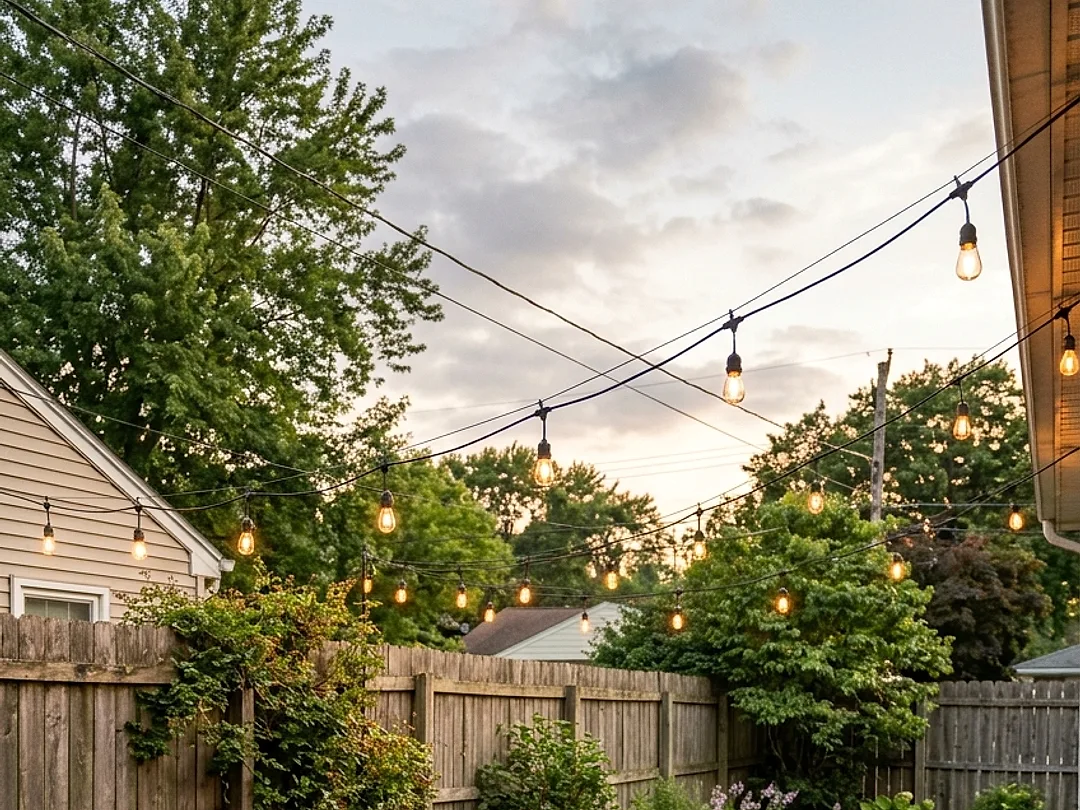
String lights add instant ambiance. Sink two 10-foot 4x4 posts 2 feet deep in concrete at opposite corners of your patio. Attach eye hooks at 8 feet high and run weatherproof string lights between them. Add a turnbuckle for tension. Total cost: about $60 for posts, concrete, and lights. Renter tip: use weighted bases instead of concrete for removable posts.
11. Create a Pea Gravel Parking Pad
Extend your patio to park a car or camper. Excavate 6" deep, add 4" of crushed stone base, compact, then top with 2" of pea gravel. Use a gravel grid to prevent ruts. Edge with 6x6 timbers. A 10' x 20' pad costs about $300 in materials. Check local codes for setback requirements. This is a budget-friendly alternative to concrete.
12. Add a Paver Landing at the Door
Transition from house to gravel with a 4' x 6' paver landing. Set 12" x 12" pavers on a 1" sand base, level with the door threshold. This keeps gravel out of the house and provides a stable spot for shoes. Use 24 pavers at $2 each, total $48. Seal pavers to prevent staining. Renter tip: use a pre-made concrete step instead.
13. Hang Privacy Screens from Posts
Add seclusion with outdoor fabric screens hung between 4x4 posts. Set posts 8 feet apart, 2 feet deep. Attach grommeted canvas panels with bungee cords. This blocks wind and nosy neighbors. A 6' x 8' screen costs about $40. Use stainless steel hardware to prevent rust. Renter tip: use freestanding planters with posts instead of digging.
14. Build a Gravel Patio on a Slope
On a gentle slope, terrace with 6" high retaining wall blocks every 4 feet. Fill each terrace with 2" of pea gravel over weed barrier. This prevents washout and creates usable levels. For a 10% slope, you'll need about 30 blocks for a 10-foot width. Cost: $60. Renter tip: use sandbags instead of blocks for a temporary fix.
15. Add a DIY Gravel Fire Pit Seating Area
Arrange four Adirondack chairs around your fire pit on the gravel. Add a 5' diameter circle of larger 1" river rock around the pit for safety. Use a metal fire ring and keep a bucket of sand nearby. Total cost for rocks and ring: about $50. Chairs can be budget finds at $25 each. This creates a cozy gathering spot without a concrete pour.
Interactive Pea-Gravel Patio Bag & Budget Calculator
Enter your patio width, length, and target gravel depth to get exact cubic yards, 0.5 cu-ft store bags, and timber edging needed.
Frequently Asked Questions
How deep should pea gravel be for a patio?
For a walking patio, 2 inches of pea gravel over a weed barrier is sufficient. For seating areas or tables, use 3 inches. If you're parking on it, go 4 inches over a compacted base.
How do I keep pea gravel from migrating?
Use a rigid edge like 2x4s, bricks, or steel edging. Install a gravel grid in high-traffic areas. Avoid rounded stones near doors; use a paver landing instead.
Can I install a pea gravel patio over grass or dirt?
Yes, but remove the grass first. Dig down 2 to 3 inches, compact the soil, add weed barrier, then gravel. Skipping the dig leads to weeds and uneven settling.